









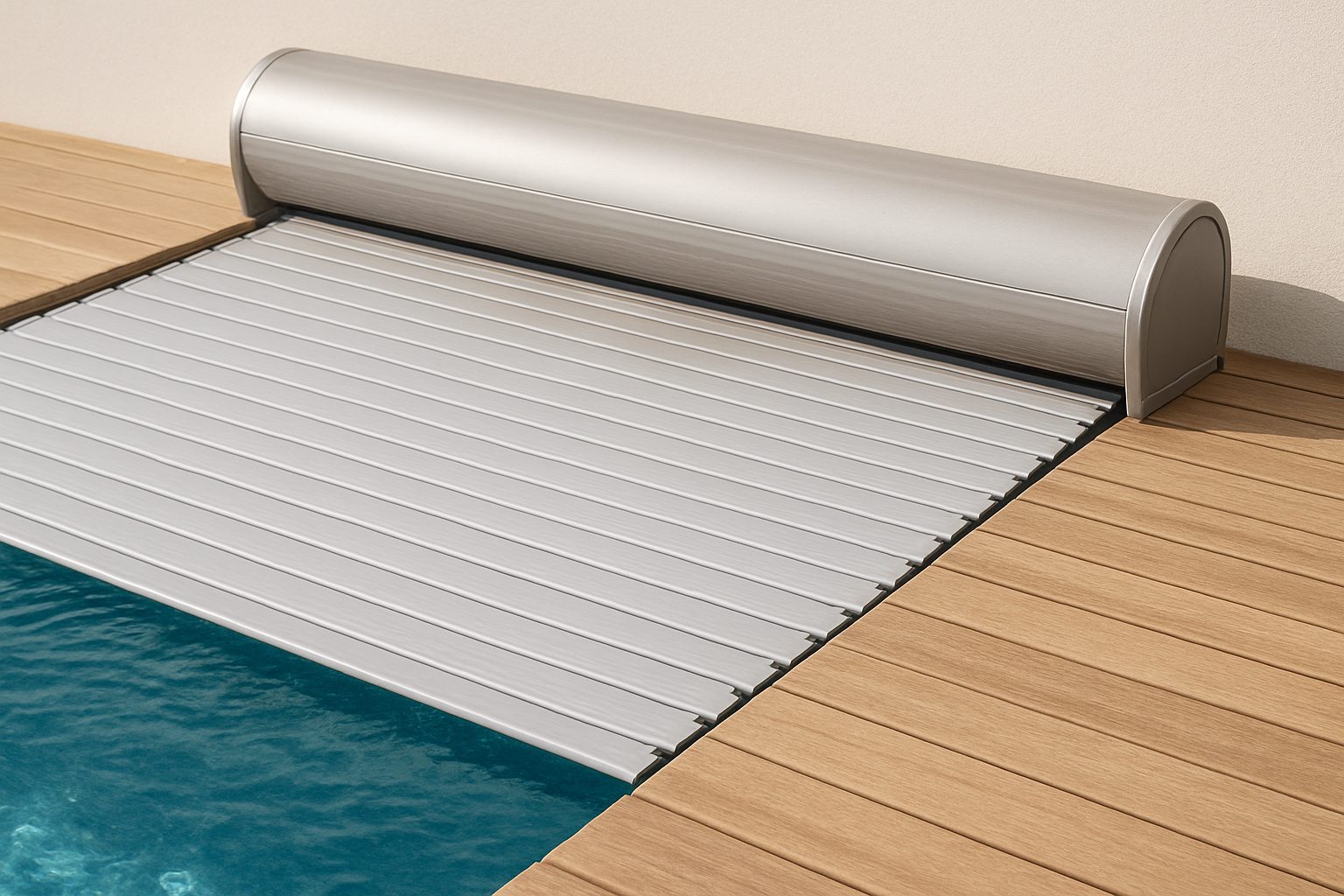
Automatic Pool Covers Are a Planning Decision, Not an Add-On
Compare the job before the product
Pool covers are often compared as products, but the better starting point is the job they need to do. A safety cover, an automatic cover, and a simple seasonal cover solve different problems. Some owners are focused on daily convenience. Others are focused on winter protection, child safety, energy use, or keeping debris out of the water.
Jameson’s automatic-cover and water-feature options includes automatic covers, safety covers, liners, lighting, pumps, heaters, and automation among the choices that shape the finished pool. That is the right frame: a cover is connected to structure, controls, patio edges, and how the pool will be used.
Three cover conversations worth having
An automatic cover is most useful when the owner will open and close the pool frequently during the week. A safety cover is more about secure seasonal closure and winter protection. A basic cover may be enough for simpler use, but it usually asks more from the owner.
Before pricing any one option, homeowners should ask how the cover stores, what deck space it needs, whether the pool shape creates limitations, how drainage will work, and who will service the cover later. The cheapest answer on paper can become awkward if it fights the patio plan.
Budget is more than the cover line
The Jameson Pool & Spa budget guide notes that patios, water features, structures, pool size, convenience features, and municipal permit timing can all affect project costs. A cover belongs in that same budget conversation, not as a late wish-list item after hardscape decisions are finished.
There is also a timing issue. If the cover requires structural planning or hidden components, it is far easier to include it before construction than to retrofit around finished stone, coping, and planting beds. Early decisions leave fewer compromises.
Another cost people miss is how a cover changes the rest of the pool edge. It may affect coping choices, stone cuts, drainage paths, control placement, and where furniture can sit without blocking access. Those details are not dramatic on a mood board, but they decide whether the cover feels effortless or always slightly in the way.
For families comparing bids, the practical question is not only whether the cover is included. It is whether the proposal explains how the cover will be integrated, serviced, and protected over time. A clear answer helps homeowners compare complete systems instead of comparing one line item against another.
The practical recommendation
Homeowners do not need to pick the most technical cover to make a good choice. They need to match cover type to daily habits, safety priorities, maintenance tolerance, and the shape of the yard. The right answer should make the pool easier to live with, not simply more impressive on a proposal.
Treat the cover as part of the pool system. When it is planned alongside liner colour, lighting, patio layout, and equipment access, it is more likely to work smoothly and less likely to feel like an expensive accessory added too late.