






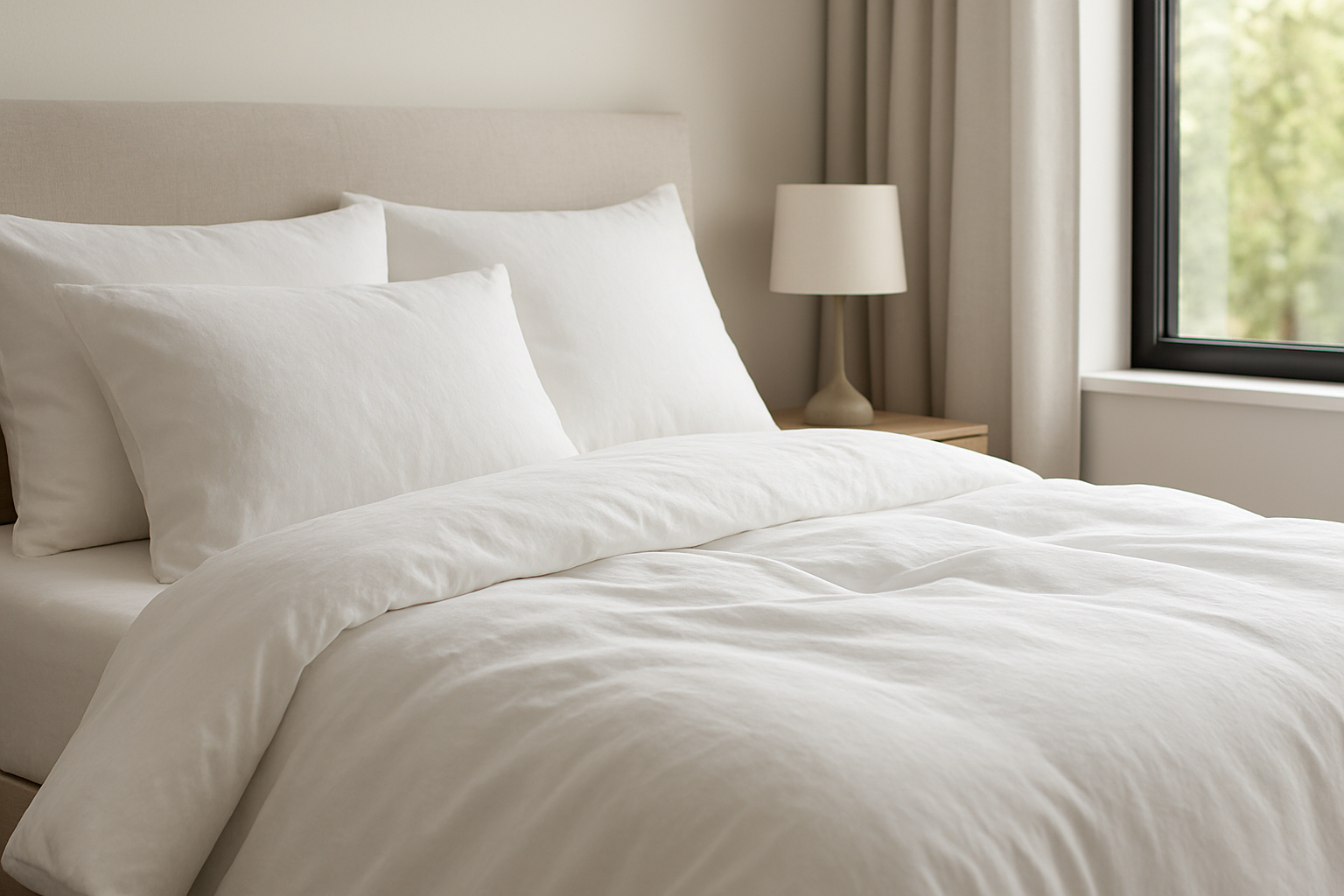
Sleeping in a warm room can feel like an uphill battle. Whether your bedroom sits directly under a sunbaked roof, traps ambient summer heat, or lacks adequate ventilation, higher indoor temperatures can quickly ruin a good night of rest. Your body naturally needs to drop its core temperature by a couple of degrees to initiate and maintain deep sleep. Standard heavy blankets and thick synthetic sheets retain body heat, making your bed an oven when the room itself remains stubbornly warm. Choosing the right lightweight cooling bedding is the single most effective way to counteract a warm room and restore restorative, undisturbed sleep.
Understanding how cooling bedding works is the first step toward building a better sleep environment. Cooling textiles do not actively generate cold air like an air conditioner; instead, they regulate temperature through breathability, moisture management, and heat dissipation. The goal is to allow trapped body heat to escape quickly while preventing sweat from pooling against your skin. By focusing on fiber composition, weave construction, and layer management, you can curate a bed setup that feels continuously refreshing, even in a naturally warm space.
Prioritize Natural Breathable Fabrics
The foundation of any cooling bed setup is the material itself. Natural plant-based and cellulose fibers are inherently superior to synthetic alternatives when it comes to temperature regulation. Synthetic fabrics like standard polyester or acrylic are made from petroleum products that effectively act as plastic barriers, trapping heat and moisture against your body. Natural fibers, on the other hand, possess microscopic pores that allow air to circulate freely.
Cotton remains a classic choice for warm rooms, but the specific type of cotton matters significantly. Long-staple and extra-long-staple cottons, such as Egyptian or Pima cotton, produce finer and stronger yarns. These finer yarns allow weavers to create soft, durable fabric that remains exceptionally light and airy. Cellulose-derived fabrics, often labeled as viscose, rayon, or Tencel lyocell made from bamboo or eucalyptus, have also gained immense popularity for warm bedrooms. These fabrics feel remarkably silky and cool to the touch upon initial contact. They excel at pulling heat away from the body and offer incredible drape, ensuring the sheet lays softly over you without feeling heavy or constricting.
Master the Art of Moisture Wicking
It’s terrible to feel overheated in bed, but it’s even worse to wake up wet from perspiration. Moisture management is a crucial factor when selecting bedding for warm environments. When your body gets too warm, it produces sweat to cool down. If your bedding cannot absorb and evaporate this moisture quickly, you end up feeling humid, sticky, and overheated.
Moisture-wicking properties vary considerably across different textiles. Linen and Tencel lyocell are outstanding in this category. Tencel can absorb moisture more efficiently than cotton and release it rapidly into the surrounding air, keeping the sleeping surface dry throughout the night. Linen absorbs a significant percentage of its weight in moisture without ever feeling damp to the touch, making it ideal for high-humidity conditions.
When shopping for cooling bedding, look for materials that highlight both breathability and moisture absorption. A sheet that absorbs sweat but dries slowly will eventually feel heavy and damp, whereas a fabric that combines fast absorption with rapid evaporation ensures a consistently dry microclimate under the covers.
Conclusion
Comfort and design don’t have to be sacrificed in order to create a cozy resting haven in a naturally warm bedroom. By shifting your focus toward natural fibers like crisp percale cotton, airy linen, and moisture-wicking Tencel, you can significantly lower the temperature under your covers. Avoid the trap of ultra-high thread counts, embrace lightweight layering techniques, and ensure every layer from the mattress protector to the pillowcase promotes active airflow. With the right combination of breathable, moisture-managing bedding, you can enjoy cool, uninterrupted, and deeply refreshing sleep no matter how warm the room stays.
The Short Version
- Sleeping in a warm room can hinder the ability to achieve deep sleep, as the body needs to lower its core temperature for optimal rest.
- Cooling bedding works by regulating temperature through mechanisms like breathability, moisture management, and heat dissipation rather than actively generating cold air.
- Natural fibers such as cotton and cellulose-derived fabrics like Tencel excel in temperature regulation compared to synthetic fabrics like polyester, which trap heat.
- Moisture management is crucial for cooling bedding, with materials like linen and Tencel lyocell being particularly effective in absorbing and quickly evaporating sweat.
- A combination of breathable, moisture-wicking textiles and lightweight layering can significantly improve sleep quality in warm environments.